
Sone Rating Basics
Sones are a perceived-loudness reference for exhaust fans. A sone rating without CFM is incomplete because installed sound can change with CFM, duct restriction, mounting, grille, controls, and termination.
The project first needs a room exhaust target, then the sound expectation can be compared against fan options and the installed duct path.
Bathrooms, restrooms, utility rooms, restaurant support rooms, and storage exhaust do not share the same sound tolerance. The closer the fan is to occupied space, the more carefully sone expectations should be reviewed.
Sone vs dBA and duct path
Long duct runs, elbows, small grilles, dampers, roof caps, wall caps, and backdraft devices can increase restriction. Restriction can reduce delivered airflow and change how the fan sounds after installation.
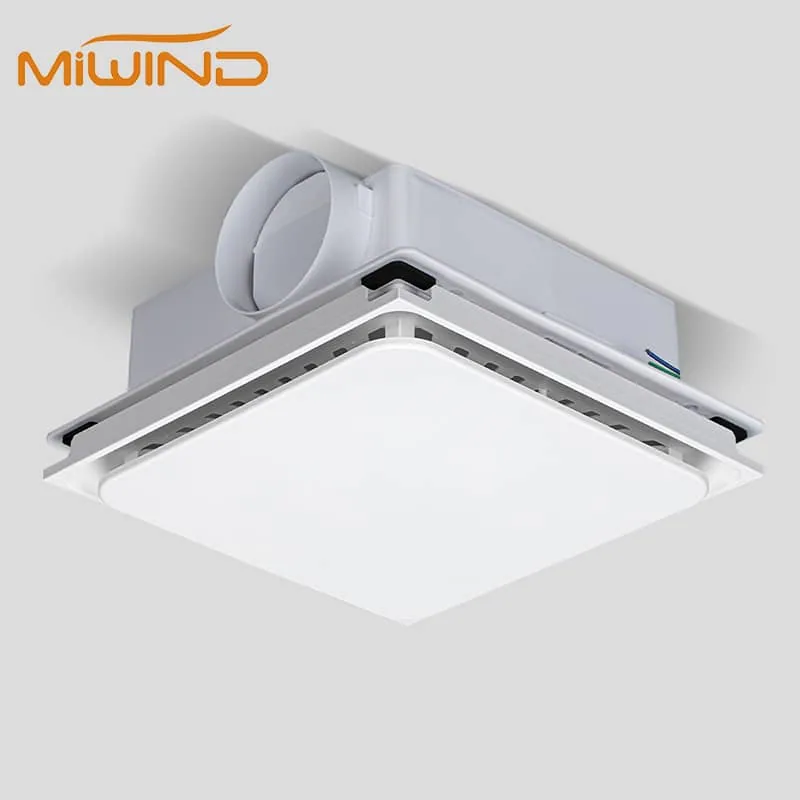
MiWind Exhaust Fans are the natural starting category for room exhaust. Ventilation Fans enter the discussion when the fan needs to move away from the room or overcome a more difficult duct path.

Controls and model data still matter
Timer switches, humidity controls, interlocks, and continuous operation change the electrical and usage review. Residential-adjacent projects may also require model data for listing, sound, efficiency, or installation model data.
Room Sound Sensitivity
Sound expectations should follow the way the space is used. A fan over a restroom corridor, a fan above a small office ceiling, and a fan serving a utility space can carry very different tolerance for audible operation.
Do not separate the listener from the fan. Mounting location, ceiling construction, grille choice, duct path, and operating schedule all shape how the equipment will be perceived after installation.
Keep document requests precise
When a buyer asks for sound or efficiency data, the request should name the equipment family, model if known, airflow point, voltage, and document need. A general request for a quiet fan is not enough to prepare submittal documents or buyer documents.
MiWind Exhaust Fans and Ventilation Fans may need different model data depending on the product and installation path. Keep product page language tied to the exact model detail.
Choose the fan path by room and duct
Ceiling exhaust fits many direct room-exhaust situations. Inline fans become useful when the fan should move away from the occupied room or support a longer duct route. Cabinet or utility selection becomes more relevant when access, pressure, or serviceability is the main constraint.
That path should be chosen before comparing sound numbers. Otherwise a low sone value can distract from a duct route that will not support the airflow target.
Exhaust target check
The short check frames a bathroom or restroom airflow target and flags longer duct runs. The output is not an installed sound prediction.
Enter area and duct length to form a quick exhaust target and duct note.
Sone Rating Limits
The usual error is comparing low-sone numbers while ignoring CFM and duct restriction. A better selection asks whether the fan can deliver the required air at the expected sound level in the actual installation path.
Sone Rating Matrix
The matrix reads sone concerns by room condition and duct difficulty.
| Exhaust condition | Project facts | Related page | MiWind family |
|---|---|---|---|
| What are sones? | Sound vocabulary, CFM point, room use, duct route | Exhaust Fan Sone Ratings | Bathroom or exhaust fan sound check |
| Bathroom or restroom | Area, moisture load, duct route, controls, sound target | Bathroom Exhaust Fan Sizing Calculator | Exhaust Fans |
| Long duct run | Duct size, length, elbows, discharge path | Ventilation CFM Calculator | Ventilation Fan |
| Quiet occupied zone | Sone target, mounting, duct route, schedule | Bathroom Exhaust Fan Sizing Calculator | Quiet exhaust or inline selection |
| Utility exhaust | CFM target, source, access, voltage, controls | Ventilation CFM Calculator | Exhaust Fans or Cabinet Fans |