

Opening and Mounting
Measure the finished door width, clear opening height, and actual mounting height from the finished floor to the air curtain discharge. Width usually frames the cabinet length; mounting height decides whether the opening is still in a practical range for the selected product family.
Header and ceiling clearance matter before any model comparison. A recessed header, low ceiling, uneven wall surface, exposed conduit, sign, sprinkler, or door closer can shift the project toward a different mounting style even when the width looks ordinary.
Doorway Duty
A retail entrance, delivery opening, ceiling-mounted doorway, cold-room door, and kitchen-adjacent opening should not be treated as the same air curtain problem. Retail projects usually emphasize comfort, insects, and traffic. Cold-room projects add temperature separation, condensation, frost risk, and cycle rate. Service doors add wind, dust, and repeated opening patterns.
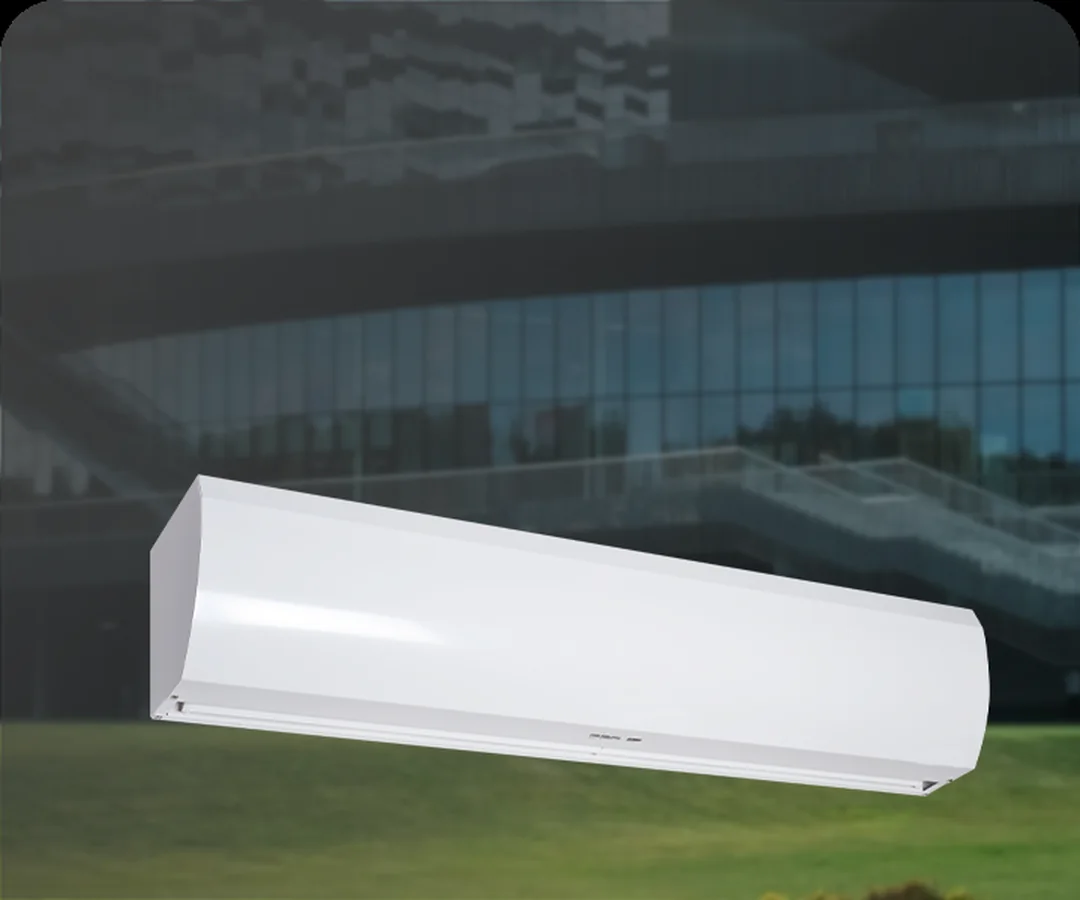
This is where the chart connects to MiWind Air Curtains instead of staying as a bare lookup table. Standard, heated, industrial, ceiling-mounted, and cold-storage air curtain families only make sense after the doorway duty is known.
Heat, Voltage, Controls
Heated and unheated units serve different project expectations. Heating preference affects electrical planning, installation clearance, and current model documents; it should be discussed before a project moves into model selection.
A heated air curtain request still belongs in this sizing path first. Door width, clear height, mounting height, exposure, and traffic establish the opening; voltage, circuit capacity, control method, and the comfort complaint decide whether the A3 heating air curtain series should be reviewed next.
Door switches, wall controls, remotes, and continuous operation also change the selection. For a distributor or contractor, these details are not decorative form fields; they are the difference between a useful equipment request and a follow-up email asking for missing basics.
Installation Notes
A doorway selection becomes useful when the installer can see where the unit will sit. Note whether the air curtain mounts on a wall, above a recessed door, near a ceiling obstruction, or near a sprinkler, sign, light, conduit, or door closer. These details may change bracket choice, cabinet clearance, service access, and electrical routing.
For cold-room and kitchen-adjacent openings, include temperature split, moisture, odor, and makeup-air notes with the doorway dimensions. Those conditions shape the product discussion more than a simple width class.
Application Differences
A front entrance usually needs a cleaner comfort and traffic discussion. A delivery opening needs cycle rate, exposure, and abuse tolerance. A cold-room door needs temperature separation, frost or condensation notes, and current model data. A kitchen-adjacent doorway may need coordination with exhaust and makeup-air conditions.
If the entrance complaint is cold staff or customer discomfort, use the air curtain size chart as the sizing reference and use the heated series page for product fit. That keeps size, dimensions, and standard-size information together while the heated page handles electrical and comfort fit.
The same nominal width can lead to different MiWind Air Curtain families because the doorway is doing different work. Treat the chart as the first sorting step, then use the calculator or product page to preserve the field facts.
Keep the document request concise
A useful air curtain request does not need a long narrative. Send the door width, clear height, mounting height, exposure, heat preference, voltage, control expectation, header photos, and application type.
Those details give the distributor enough information to route the doorway toward a standard, heated, industrial, ceiling, or cold-storage option without turning the first conversation into a final model promise.
Doorway sizing check
The short check below establishes a doorway width class and flags unusually tall mounting. Use it as an air curtain size chart by door width and mounting height before the full air curtain sizing calculator, teaching selection logic without replacing equipment selection.
Enter the opening width and mounting height to get a quick air curtain size class and mounting note.
Chart Limits
The most common error is selecting by door width alone. The second is assuming the same cabinet length fits a retail doorway and a cold-room doorway. The third is treating an air curtain chart as a final model selector before voltage, heat, mounting, airflow, and model documents have been checked.
Use the table at the end as a doorway reading aid. It is not a certification statement, a code approval, or a final installed-performance claim.
Door Condition Matrix
Read the matrix as a doorway-context guide, not as a final model schedule.
| Door condition | Project facts | Related page | MiWind family |
|---|---|---|---|
| Retail entrance | Finished width, clear height, mounting height, traffic, comfort or insect goal | Air curtain sizing calculator | Air Curtains |
| Retail or supermarket door | Energy loss, unstable temperature, dust or insect entry, customer and staff comfort | Retail Entrances | Air Curtains |
| Ceiling mounted or recessed opening | Finished width, ceiling opening, plenum depth, access panel, voltage, controls | Ceiling Mounted Air Curtains | Air Curtains |
| Restaurant door | Door width, dining entrance or kitchen-adjacent location, odor or comfort concern, traffic, controls | A5 Restaurant Air Curtain | Air Curtains |
| Heated retail entrance | Finished width, mounting height, winter comfort complaint, voltage, circuit capacity, controls | A3 Heating Air Curtain | Air Curtains |
| Cold-room door | Door width, temperature split, cycle rate, frost or moisture notes | Cold Room Doors | Air Curtains plus equipment confirmation |
| Service entrance | Opening size, exposure, delivery cycles, voltage, header photos | Air curtain sizing calculator | Air Curtains |
| Kitchen-adjacent door | Door size, heat or odor notes, makeup-air boundary | Commercial Kitchens | Air Curtains plus fan direction |
Size Phrase Translation
| Search phrase | What it usually means | What to confirm |
|---|---|---|
| 90 cm air curtain | A short cabinet-width request | Finished width, mounting height, voltage, wall or ceiling space |
| 200 cm air curtain | A long opening or paired-door request | Opening span, traffic, mounting height, service access, controls |
| Recessed air curtain | A ceiling integration request | Ceiling opening, plenum depth, access panel, discharge path |
| Restaurant air curtain | A doorway comfort or separation request | Dining/kitchen-adjacent location, odor source, traffic pattern, cleaning access |
| Heated air curtain | A cold-entrance comfort complaint | Finished width, mounting height, voltage, circuit capacity, controls, comfort zone |
Source-backed air curtain length classes
Use the source length classes as early width guidance only; wider openings may need paired-unit or project-specific review before model documents.
| Published source length | Approximate inch class | How to use it |
|---|---|---|
| 600 mm | about 24 in | Short doorway or compact service opening; confirm finished width and mounting clearance |
| 900 mm | about 35 in | Common single-door shorthand; confirm finished opening width and traffic |
| 1000 mm | about 39 in | Intermediate doorway class; confirm side clearance and controls |
| 1200 mm | about 47 in | Wide single or narrow double-door class; confirm mounting height and exposure |
| 1500 mm | about 59 in | Wider entrance class; confirm cabinet support, voltage, and header photos |
| 1800 mm | about 71 in | Large opening class; confirm exposure, traffic, and service access |
| 2000 mm | about 79 in | Largest common source length; wider openings need paired-unit or project-specific review |