
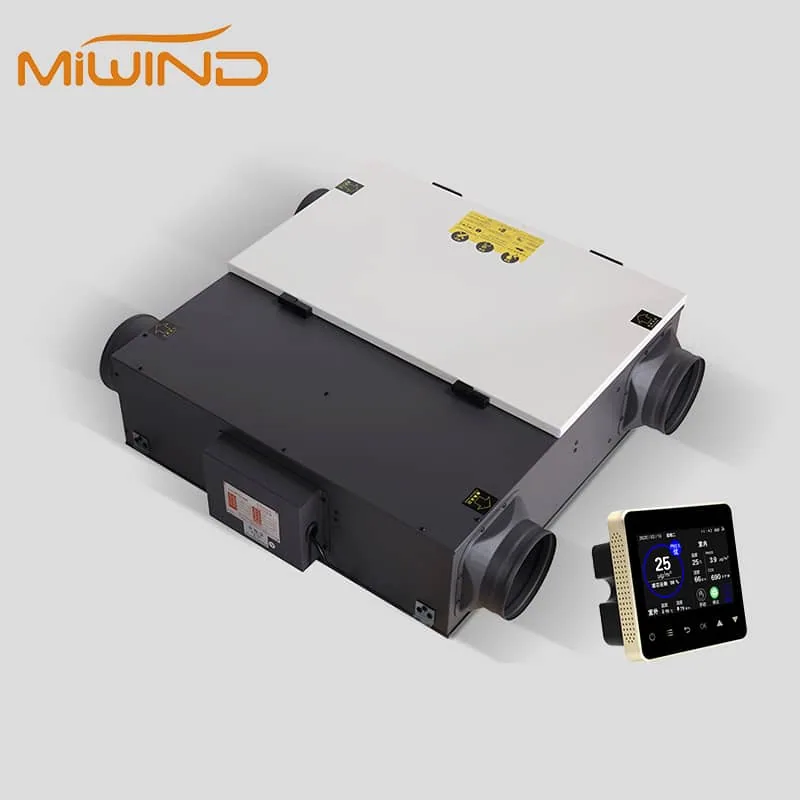
Difference between HRV and ERV
Humid cooling seasons often push ERV discussion forward because latent moisture transfer may matter. Cold heating seasons may point toward HRV or ERV depending on indoor humidity goals and building operation.
For HRV vs ERV and ERV versus HRV searches, the useful answer is not a label alone. The useful answer keeps climate, indoor humidity goal, outdoor-air CFM, duct route, filters, controls, and current model documents together.
That climate screen is useful, but it is not enough to select equipment. HRV and ERV comparisons for a mixed-use building, a gym, a classroom, and a cafe all need fresh air for different reasons.
Bring airflow, filtration, and access into the same selection
Fresh-air CFM decides the size of the conversation. Filter expectation and service access decide whether the product can be maintained. Duct route and pressure path decide whether the airflow can be delivered.
MiWind Fresh Air and ERV Systems, air filter boxes, and ultra-thin fresh-air units should be compared only after those practical conditions are visible. Treat HRV and ERV systems as fresh air ventilation systems first, then narrow the recovery direction.
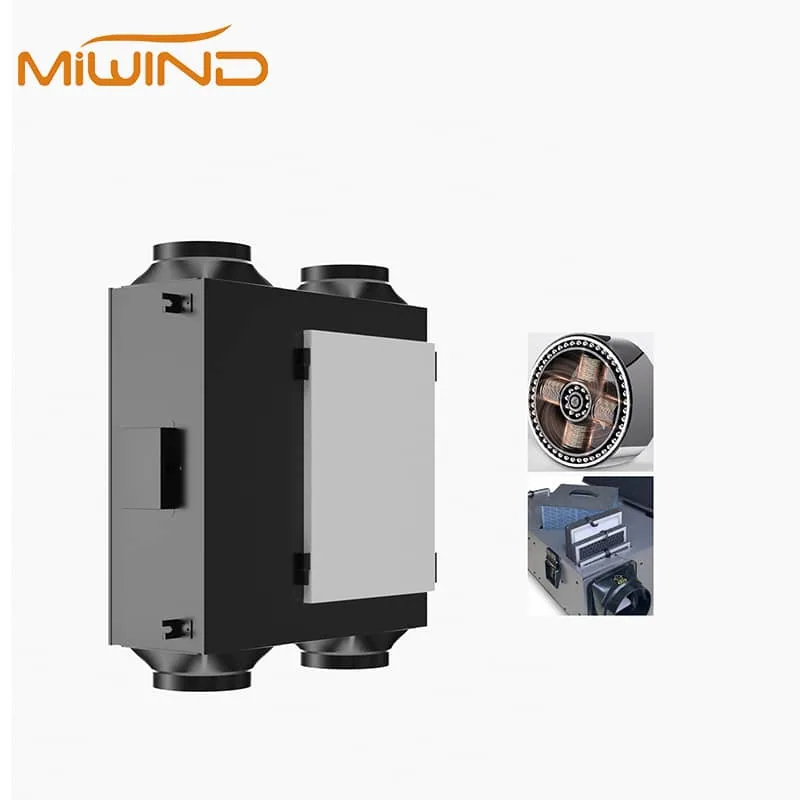
Retrofit Constraints
Retrofits often fail in the details: no service side, tight ceiling space, difficult duct routes, unclear voltage, or no clear filter replacement path. A recovery label does not solve those constraints.
For retrofit fresh-air work, capture the existing duct path, access panels, ceiling height, condensate concerns, controls, sound sensitivity, and document requirements before narrowing the equipment family.
Tie humidity to building use
Humidity transfer is not a marketing label; it is a project condition. A gym, classroom, cafe, clinic support room, and small office can all need fresh air while carrying different moisture, odor, occupancy, and schedule patterns.
Before choosing a recovery direction, note whether the goal is comfort, odor control, moisture moderation, filtration, or steady outdoor-air delivery. The same CFM can lead to a different discussion when the room use changes.
Treat maintenance as selection logic
Recovery equipment lives with filters, cores, drains or condensate concerns, access panels, controls, and periodic inspection. If a unit cannot be serviced, the apparent equipment fit is weak even when the airflow and recovery direction look reasonable.
Equipment selection should therefore include service side, ceiling access, filter size or replacement path, control location, sound sensitivity, and document requirements before the project moves toward a model selection.
Fresh Air Ventilation Systems
A recovery label does not describe the whole fresh-air selection. The project still needs supply and exhaust routes, filter expectations, service clearance, control sequence, condensate or humidity notes, and document need.
When those facts stay together, ERV and HRV become practical choices inside a project record instead of abstract climate labels. HRV and ERV systems should connect to rooms, CFM, ducts, filters, controls, access, and model documents.
Recovery direction check
The short check is a discussion starter. Use it with the heat recovery ventilator sizing worksheet before equipment selection so climate, CFM, humidity goals, duct path, filter access, service clearance, and model data stay together.
Select climate and fresh-air CFM to frame the HRV vs ERV and heat recovery ventilator sizing discussion.
Beyond climate shortcuts
A frequent error is to say humid equals ERV and cold equals HRV without reading the building. That shortcut ignores occupancy, humidity target, maintenance access, controls, and model data.
ERV HRV Matrix
Compare HRV vs ERV, ERV versus HRV, fresh-air ventilation goals, and project conditions before selecting a fresh-air equipment path.
| Project condition | Project facts | Related page | MiWind family |
|---|---|---|---|
| Local HRV or ERV fresh-air query | Climate, humidity goal, outdoor-air CFM, duct route, filter access, service side | ERV/HRV Selection Worksheet | Fresh Air and ERV Systems |
| Office or classroom | Occupancy, room list, CFM target, noise, filter access | Ventilation CFM Calculator | Fresh Air and ERV Systems |
| Gym or fitness | Peak occupancy, humidity, odor, fresh-air target, drainage context | Ventilation CFM and Dehumidifier Calculators | ERV plus Dehumidifier selection |
| Cafe or small commercial | Door conditions, occupancy, odor, fresh-air target, sound | Ventilation CFM Calculator | ERV, Air Curtains, Fan support |
| Heat recovery ventilator sizing path and ERV and HRV systems comparison | Existing duct path, ceiling access, filters, voltage, controls | ERV/HRV Selection Worksheet | Fresh Air and ERV Systems |
Catalog source notes for fresh-air equipment
Use these source rows as early range cues only, not project ratings. Recovery, airflow, filter, sound, electrical, and certification details need current model documents before project use.
| Equipment path | Catalog source note, not a project rating | Selection use | Document boundary |
|---|---|---|---|
| Heat Recovery Ventilation Unit | Source air volume range 150-15000 m3/h by model | Use only as an early range cue while keeping outdoor-air CFM, room use, climate, humidity goal, duct route, and service side together | Confirm selected model, units, fan curve, filters, and submittal data before project use |
| Heat Recovery Ventilation Unit | 4/6/8 inch duct-size range | Screen duct connection and service access before model selection | Confirm exact dimensions, orientation, voltage, controls, and service side before project use |
| Fresh-air filter path | Pre-filter, carbon filter, or HEPA filter pack | Keep filter expectation, pressure path, and maintenance access with the ERV/HRV decision | Confirm selected pack and replacement path |
| Air Filter Box | Source pressure loss rate 15-20% | Use as a filter pressure-impact reminder when the fresh-air path adds filtration | Verify selected filter pack, model, and duct route |