
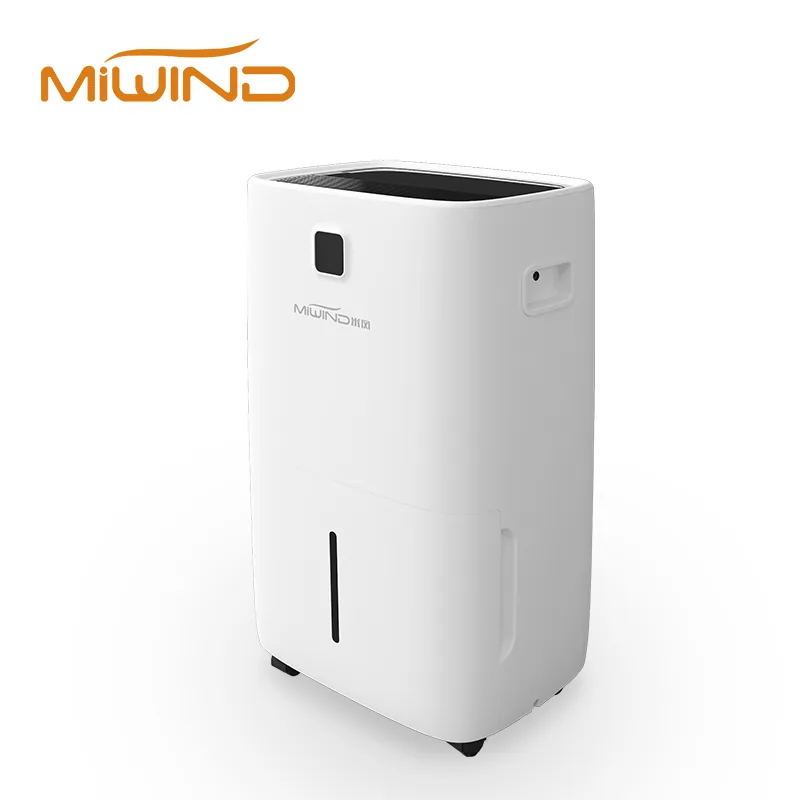
Compact Dehumidifier Series

Dehumidifiers

Start here when the project needs dehumidifiers for basements or storage rooms. Confirm dimensions, voltage, access, controls, and current model documents before selecting an exact model.

  • Basements
  • Storage rooms
  • Small commercial spaces
Typical uses
3 checks
Product documents
1 available
Request model documents
Model review

Models

Choose the model that matches the opening, airflow duty, mounting condition, and electrical option.

Compact Dehumidifier Series

Compact Dehumidifier

Compact dehumidifier for basements, storage rooms, and smaller commercial spaces where continuous drainage, frost handling, fresh-air path, and fault self-checking need review.

Airflow
Confirm airflow and dehumidification capacity by current model documentsModel check
Voltage
Confirm the US voltage optionModel check
Mounting
Freestanding or project-specific placement; verify clearanceModel check
Applications and build notes

Typical uses

  • Basements
  • Storage rooms
  • Small commercial rooms

Build notes

  • Continuous drainage details
  • Automatic frost-melting and fault self-checking notes
  • Fresh-air supply and efficient dehumidification path
  • Use moisture load and temperature before choosing capacity
Model dataCheck current model documents before quote or submittal use.

Applications and installation

For model selection, prepare room volume, temperature range, humidity concern, drainage path, runtime expectation, voltage, and any related ventilation or fresh-air requirement.

Typical uses

Review basements, storage rooms, gyms, cold-adjacent spaces, and moisture-sensitive rooms by moisture source, temperature range, room volume, drainage path, and operating schedule.

Product fit

Review this series when humidity removal is the primary need. Move to ventilation fan or fresh-air review when odor, occupancy, or air-change requirements are stronger than moisture removal.

Installation

Confirm drainage method, service clearance, filter access, power location, air circulation path, and whether the room temperature stays inside the product operating range.

Parameters

Read moisture-removal capacity, airflow, operating temperature, drainage, controls, power input, and dimensions together. Room size alone does not explain the moisture load.

Sizing inputs

Moisture-control projects need space size, humidity load, temperature, drainage, and duty cycle before equipment selection.

  • Capture area, temperature, moisture source, target humidity, and drainage expectations.
  • Avoid selecting by square footage alone when moisture load is high.
  • Confirm electrical and service requirements before quotation.
  • Pints per day
  • Coverage area
  • Temperature range
  • Drainage
  • Power
  • Controls